
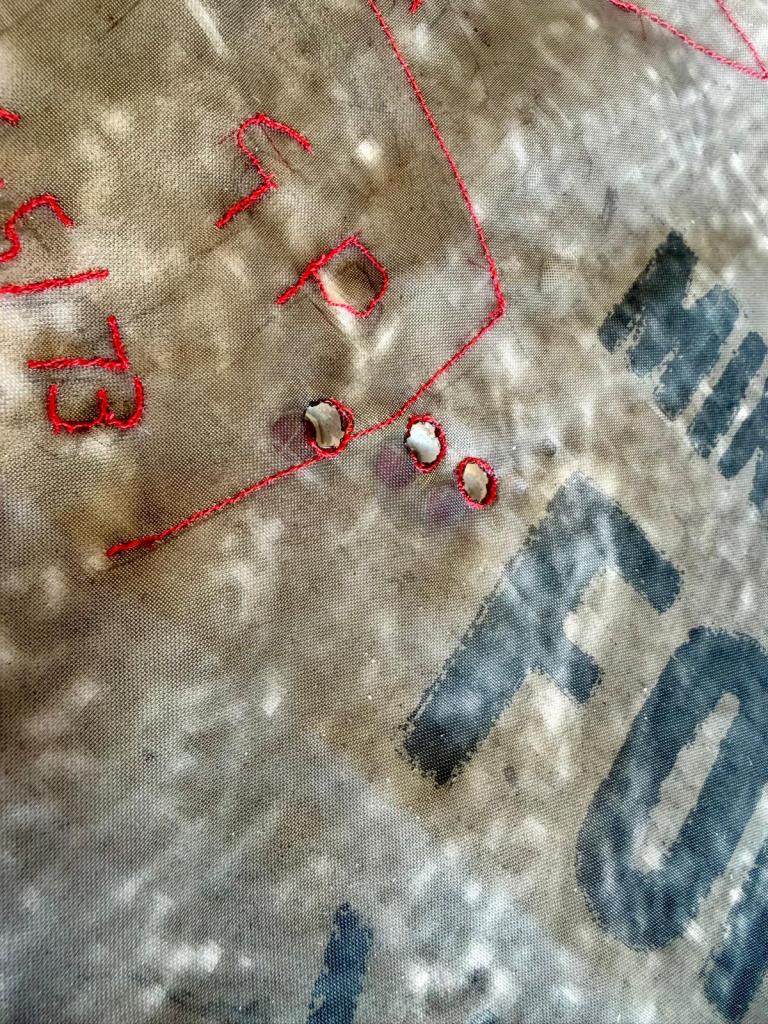
In 1979 a soldier was posted to a market town called Castlederg while serving in the British Army. Castlederg lies to the west of Northern Ireland surrounded on two sides by the Irish border. During the ‘Troubles’ the area was a hot spot for violence, mostly initiated by the Provisional IRA. He was assigned intelligence work with special responsibility for briefing troops going out to patrol the area. One day he was presented with a recovered notice which had been used by someone for target practise. The sign itself had been in place for a number of years at the entrance to a forest. Being entitled, ‘Ministry of Agriculture’ it may have been seen by some of the population as an unwanted symbol of British rule. The sign itself is metallic, perhaps inherently suggesting inflexibility. Taken together with the order ‘VEHICLES NOT ADMITTED’, its’ message may have demanded a response from those opposed to authority, albeit a violent one. Further examination reveals that in happier times the notice had been a place where people had left their mark and wanted to recall their passing. This is seen in the graffiti left by an unknown person in 1971; ‘Mary McGlinchey’ dated 1972; and ‘GP’ dated 6 May 1973. In sharp contrast, the 12 bullet holes are anonymous. They seem to usher in a sea change. It is no longer enough to record our own name in passing. The future demands us to make other people take note, and be afraid.
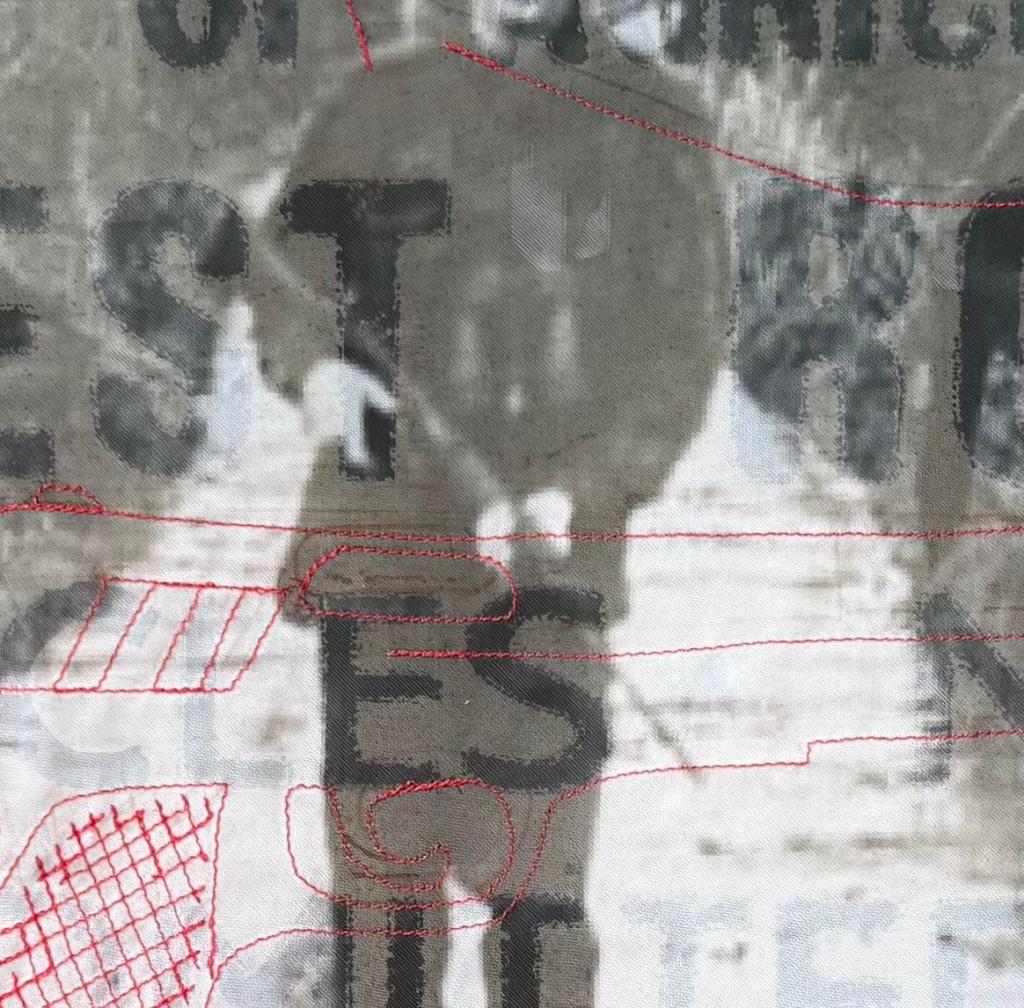
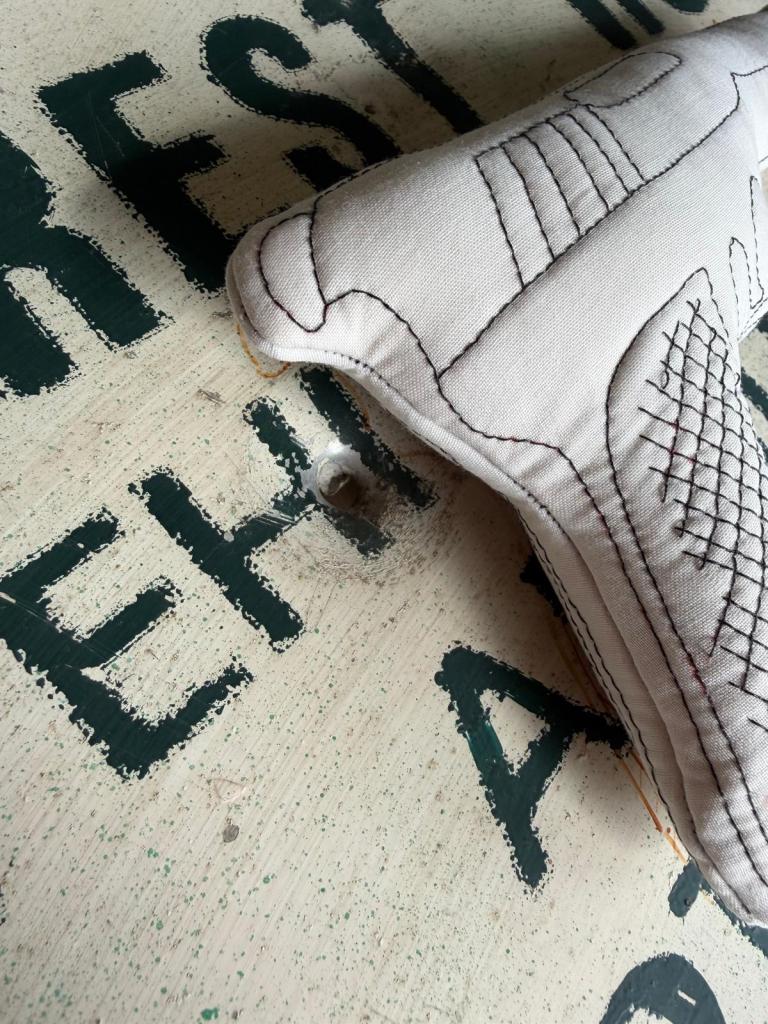
The soldier added his own embellishments in 1979. These included an outline of his own personal weapon together with three rounds of ammunition. He also drew the symbol ‘Eire Nua’ or New Ireland, as advocated by the Provisional IRA and Sinn Fein. The ‘4’ represents republican hope for unification of the four kingdoms of Ireland; Ulster, Connacht, Leinster and Munster. As a symbol, it appeared widely on literature brightly coloured in orange and green. An enticing dream as yet unrealised.
He also embellished the notice in Letraset with the words ‘All Quiet on the Western Front’. This was a nod to Erich Remarque’s novel of WW1 fame, and reflects the fact that although times and places may change, human nature does not. The outline of the gun, and the bullet holes now stand out in stark opposition to each other; a testimony to what we can expect when the talking stops. It invites us to remember the plea for peace as represented in Remarque’s novel, and by implication, the innocence of the graffiti left by people simply enjoying a walk in the woods. The reader is left to wonder what happened to Mary McGlinchey and whether she was able to live her life free of the troubles which later went on to envelop the whole population.
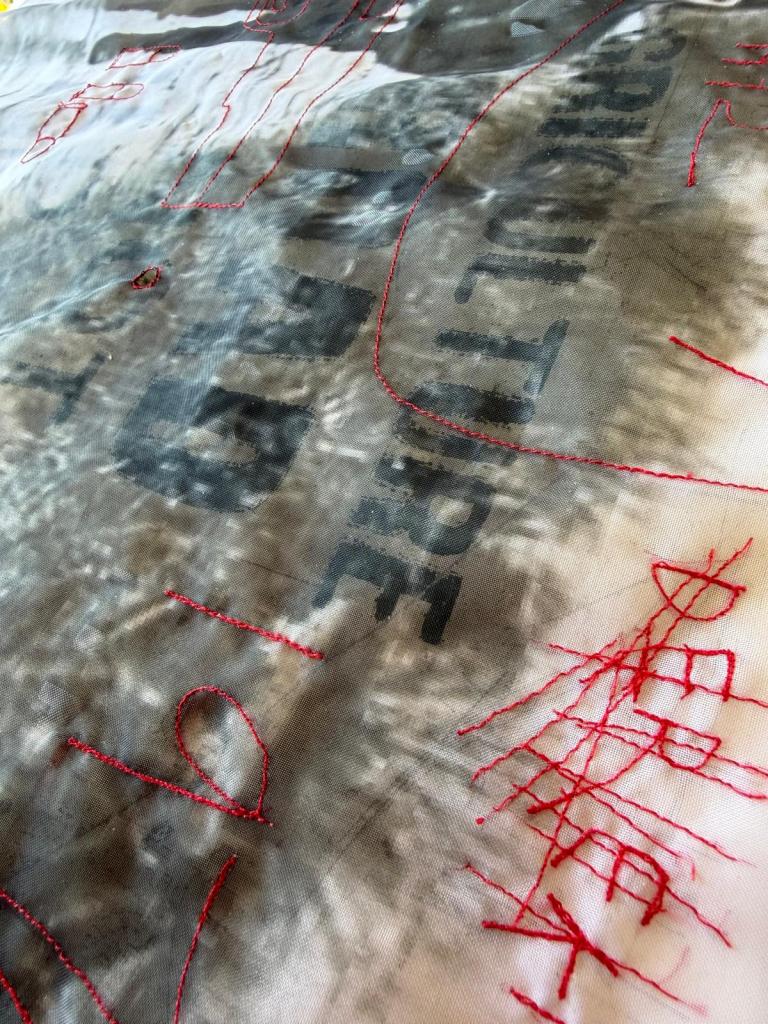
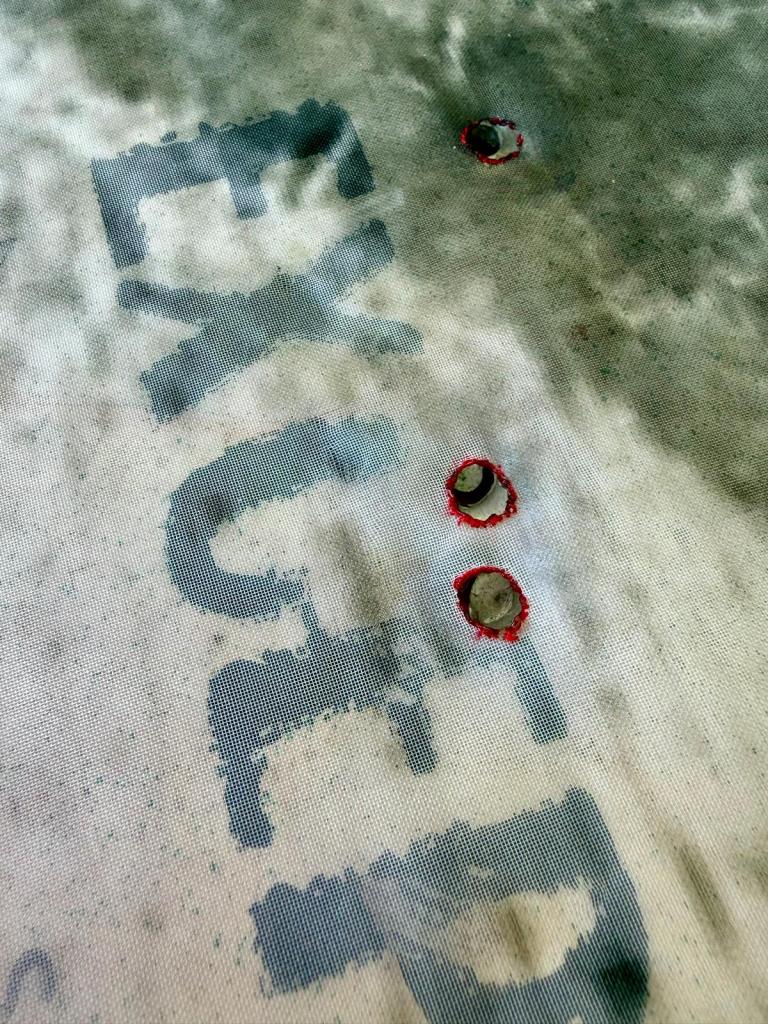
The artist has added her own interpretation. The bullet holes allude to bloodshed in memory of the innocent lives lost while acknowledging that where guns exist, there will always be victims. With hindsight the notice sends us all a warning. To quote George Santayana ‘Those who cannot remember the past are condemned to repeat it’.

It will be good to hear your comments!