I joined Out of the Fold in 2025 and it was agreed that the group work together in pairs on collaborative pieces for an exhibition. Heather Evans and I were picked to work together. I did not know Heather before we began this collaborative project, but we discovered a shared interest in history. Heather had already started investigating the history of textiles in Norwich and we began our research with a trip to Norwich.
We followed the ‘The Norwich Textile Trail’, an app with a self-guided tour round the city. https://www.thenorwichsociety.org.uk/explore-norwich/norwich-textiles-trail
The street names, architecture and layout of the roads reflect the city’s textile heritage. Below are the Weavers Cottages in Norwich.
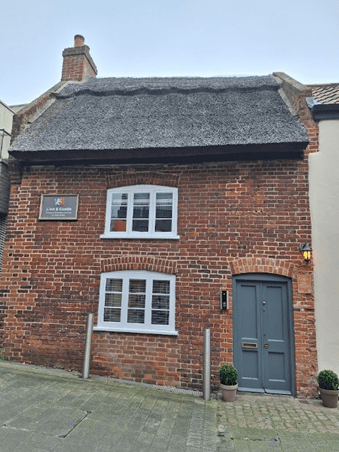
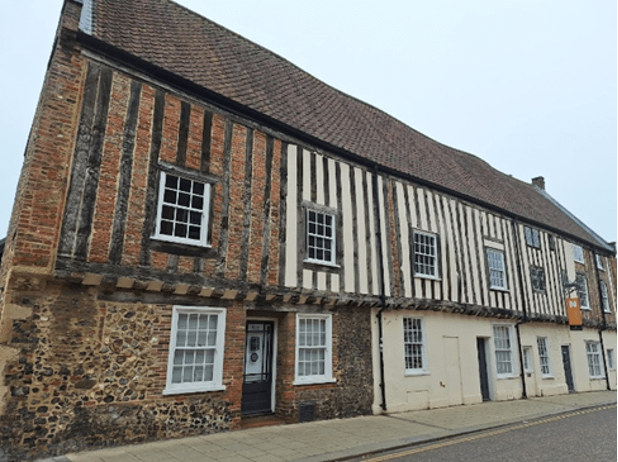
In the fourteenth century, Norwich was famous for its use of madder for dyeing and the quality of its worsted woollen cloths. It became prosperous but in the mid-sixteenth century England suffered an economic recession, and the Norwich textile industry went into decline. It was a desperate time, and the City Corporation took action. It invited Dutch and Walloon refugees to settle and weave in the city. Known as ‘Strangers’ they brought innovative ideas and techniques with them and developed a range of ‘Norwich stuffes’. These fabrics were lighter and warmer than the earlier worsted cloths and sold well, restoring Norwich as a textile centre once again.
‘Strangers hall’ and ‘Dragons Hall’ where the weavers traded still remain. Strangers Hall was fascinating, layers of history with staircase and rooms all higgledy piggeldy together.
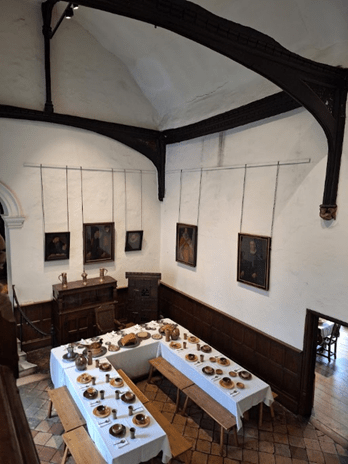
Strangers Hall
After our trip, further reading revealed how enterprising the spinners and weavers became. We came across a snippet of a document in ‘The Fabric of Stuffes’ by Ursula Priestley. The Norwich Records Office supplied a copy of the whole document.
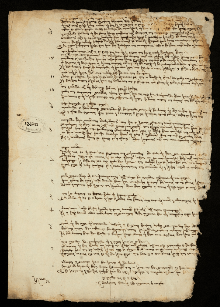
In 1611, the City Corporation sent this letter to the Privy Council in London. It requests that Norwich cloths be exempted from passing through the London trading halls. The Corporation did not want their ‘newe inventions’ to be discovered (and they also wanted to avoid additional taxes). We were intrigued by the difficulty we had reading the document. The handwriting has dramatic flourishes and loops. The spelling is erratic and inconsistent. There were also words specific to the weaving trade but also words whose meanings have changed over the centuries. The word ‘secrets’ was almost indecipherable. This led to a discussion about hidden meanings and secrets. Heather made oak gall ink and learned to write with a self-made quill pen. I loved the flourish and pride in the way ‘Norwich’ was written and made stamps and stencils, playing with the shapes.
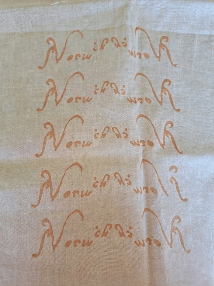
We decided that we wanted to represent the textile heritage of Norwich and the secretive nature of the trade. We are making a large wall hanging. We have dyed organdie with madder. I have printed the organdie (with madder ink) designs based on the madder plant and words from the 1611 document. Heather has found a map of Norwich from 1741 and is using dyed and printed cloth to applique the street map onto white organdie.
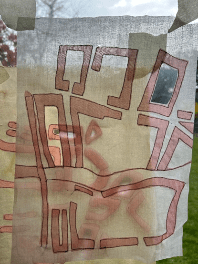
Behind this map will be lengths of the dyed and printed organdie .
The completed piece will be displayed as part of the Out of the Fold exhibit at the Creative Stitch Graduate Show 2026 at Needham Market Community Centre on 18th and 19th July, and also at
St Margaret’s Gallery Norwich as part of the Out of the Fold exhibition :
‘Material Dialogues’ 23rd September to 4th October 2026.


It will be good to hear your comments!