Chaos
Stress
Worry
Questions
Ok. Ok.
Take some time…um…let’s go for a walk, have a bath or go for a drive
Anything alone and by myself.
Now, think
Face the issues
What is really going on?
What do I think about it?
What am I going to do to solve it or help out?
Where do I go from here?
Phew, now let’s return and carry on.
This process of quiet reflection really helps me to achieve the calm and tranquility that I crave.
During my work for the exhibition, I learnt some more about myself.
I learnt that I use my art as a journaling-like process and describe my life through it.
The four new pieces are used in this way too.
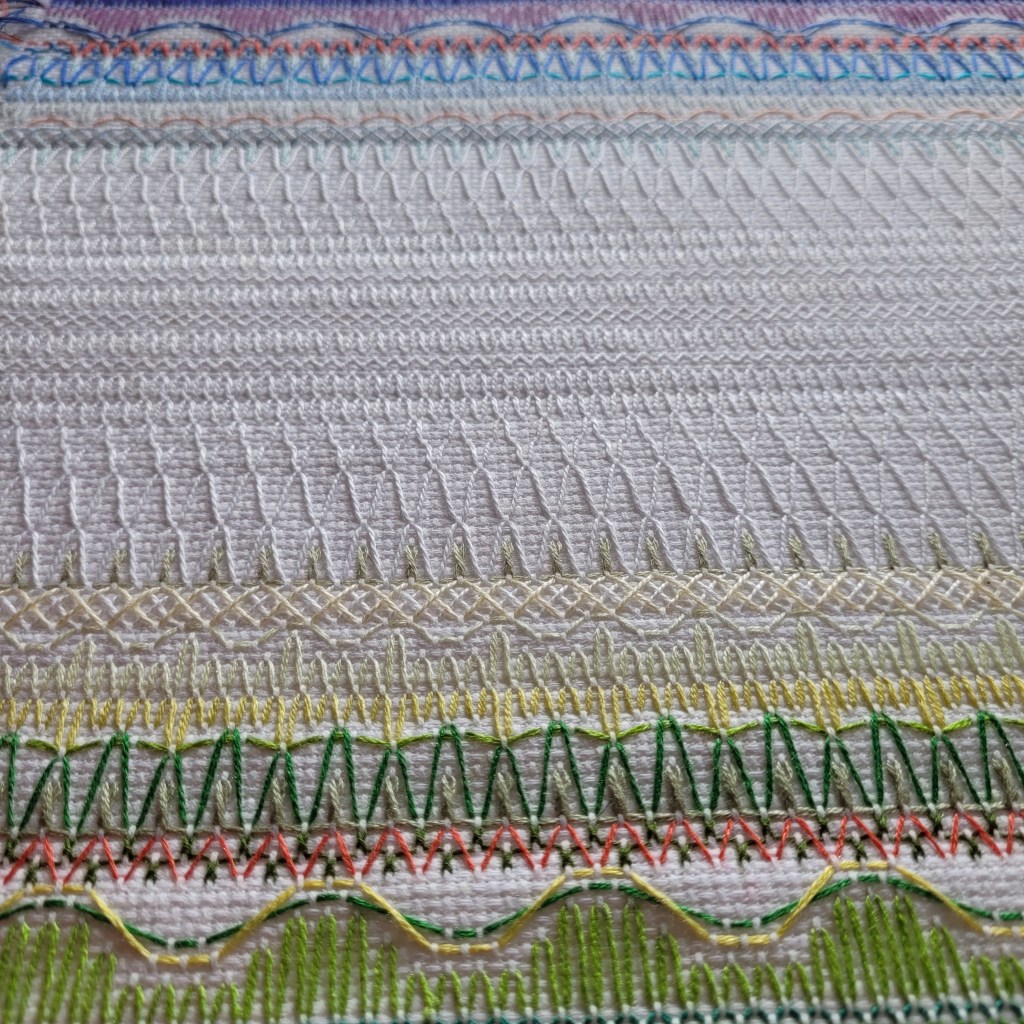
Mindscape – This smaller embroidered piece describes my need to be alone. I need time away from people and during these times quiet reflection can happen. I used white thread to show this. Colour was added to show the thoughts that bubble up from inside when I allow myself time away.
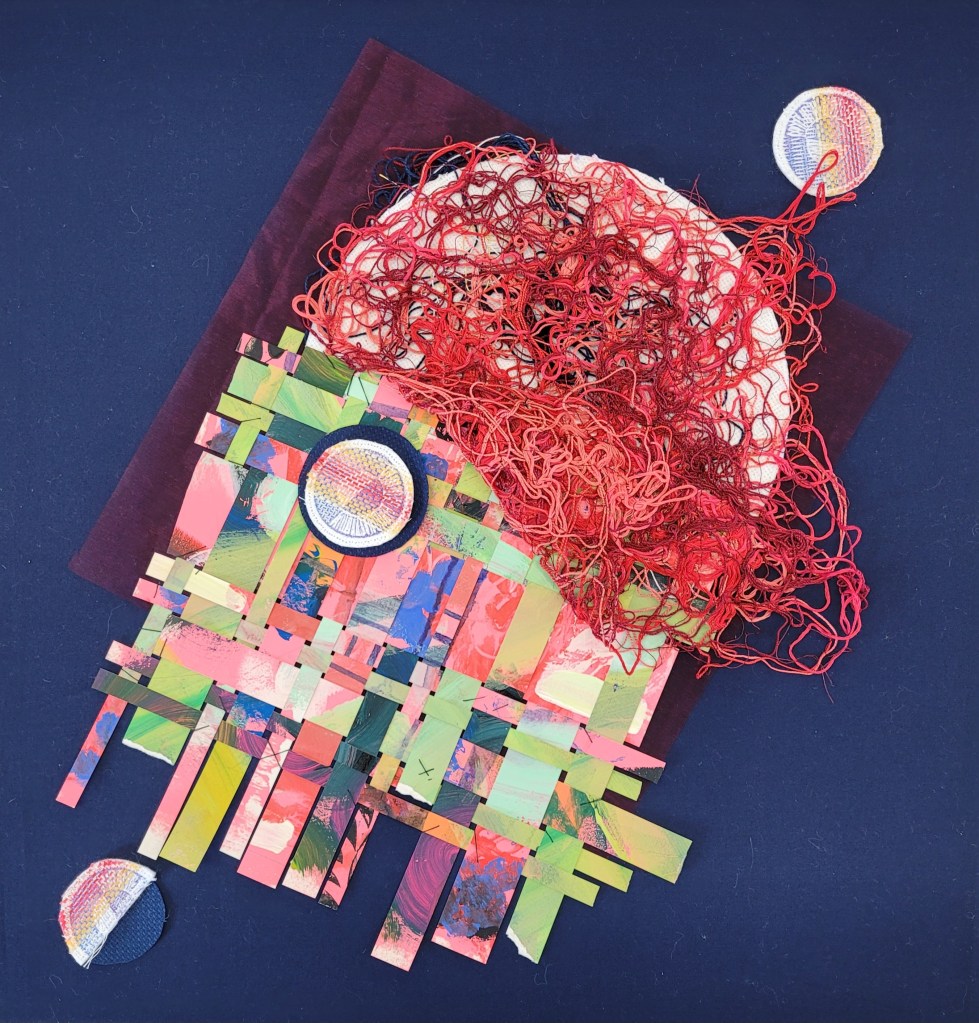
Chaos – This describes the ‘overwhelm’ that I can succumb to when I’m stressed about different situations. This is my state before the quiet reflection happens! AHHHHHHH!
The white circle represents me.
Calm – The white circle has changed position after time/s of quiet reflection. I may still be in the situation/s but I’m no longer overwhelmed, I can see my way forward.
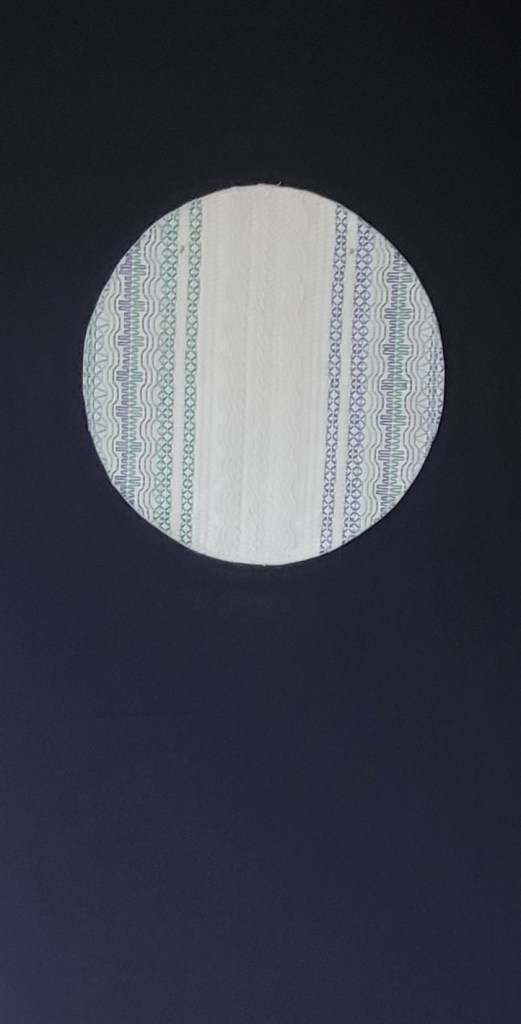
Tranquility – The feeling I have when the situations are no longer bothering me. They may still be ongoing but I am no longer influenced by them.
It took a lot of bravery to submit an embroidered circle with nothing else on the canvas! My original idea was to describe the whole process. However, when I had completed the embroidery I placed it on the navy background and I just knew it wouldn’t need anything else. I tried just to make sure by placing other fabrics, prints and circles around but it only took away from the tranquility and since that is what I was wanting to describe I left everything else off.
Each piece features Swedish weaving hand embroidery. The threads are woven through the surface of the fabric itself; neither the thread nor the needle pass to the back of the fabric. It’s quite an old technique but I love to try to give it a modern twist and use it in non traditional ways.